

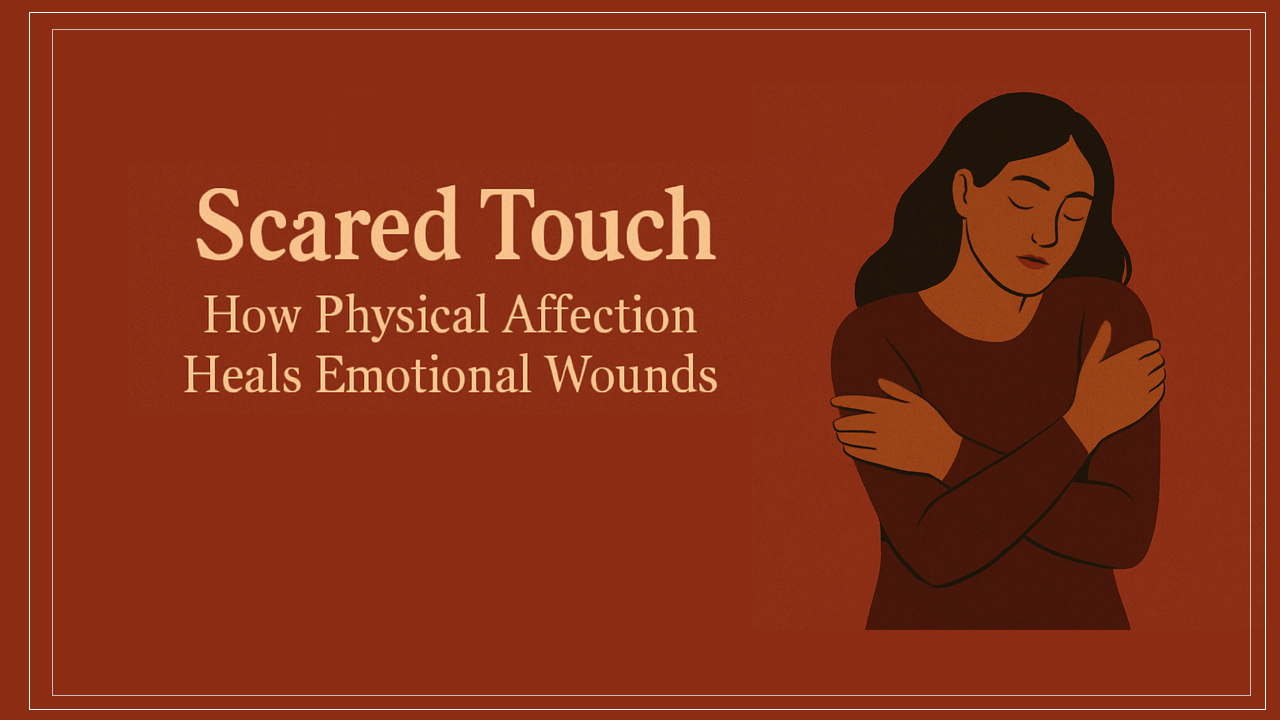
There are wounds we cannot see-the kind left behind by betrayal, abandoment, silence, or simply the slow eroison of connection. These wounds live in our minds, yes, but they also settle in our bodies. They linger in the way we flinch from touch or ache for it.
And yet, within the same body that hold pain lies the gateway to healing.
Touch – when safe, consensual, and loving – has the power to restore and emotional wounds have taken away. In this post, we explore how scared, intentional physical affection can soothe the unseen scars of the heart and reconnect us to ourselves, our partners, and to trust.
1. The Body Remembers What the Mind tries to Forget
When we experience emotional trauma – a broken heart, a betrayal, an ongoing sense of neglect – it doesn’t just live in our memory. It settles into the body. Shoulders tighten, breath shallows, we withraw or become hypersensitive. Our nervous system is always listening, and it reacts to pain whether it’s physical or emotional.
This is why touch is so powerful.
Because if trauma can be stored in the body, healing can begin there too.
2. Why we Crave Touch – And Also Fear It
Human beings are wired of touch. From the moment we’re born, we seek comfort, safety, and love. A baby left untouched may suffer deeply, even if fed and clothed. The same is true for adults – we can be in a relationship and still feel profoundly untouched.
But if you’ve been emotionally hurt, touch can feel complicated. You may long for it and recoil from it at the same time. This is your body’s way of protecting you from more pain.
Scared touch isn’t about fixing pain instantly – It’s about creating a space where healing can happen.
3. The Science Behind Healing Touch
Modern research supports what ancient wisdom has always known : touch is medicine.
- Oxytocin Release: Known as the “bonding hormone,” oxytocin is released during gentle, affectionate touch. It lowers stress, calms the nervous system, and deepens emotional connection.
- Cortisol Reduction : Physical affection reducess the stress hormone cortisol, helping the body shift out of survival mode.
- Heart Rate & Blood Pressure : Simple acts like holding hands or hugging have been shown to stabilize heart rate and lower blood pressure.
Touch literally tells the body : You are safe now.
4. Reclaiming Touch in Relationships Hurt by Distance
Emotional distance in long-term relationships often begins subtly : Words go unsaid. Arguments go unresolved. And slowly, touch disspears.
When we stop touching, we stop speaking one of the most primal languages of love.
To bring scared touch back :
- Start small. A hand on the back, A brushof fingers.
- Ask for consent. If either of you feels vulnerable.
- Hold without expectation. Let the goal be connection, not sex or fixing.
Sometimes, just sitting quietly and placing your hand on your partner’s heart can be more healing than any conversation.
5. Scared vs Sexual Touch – And Why the Difference Matters
All sexual touch may be scared, but not all scared touch is sexual.
Many Women – especially those with emotional wounds – carry unspoken trauma related to touch that feels performative, goal – oriented, or purely physical. Healing touch is about being not doing.
Scared touch :
- Is present and intentional.
- Has no agenda beyond connection.
- Honors emotional boundaries.
- Feels safe, slow and respectful.
Reignite Tip :
Practice ” non – goal” intimacy :
- Lay together with skin to skin contact without escalating to sex.
- Give and receive touch as an act of devotion, not demand.
6. Touch as a Language of Apology and forgiveness
There are moments word fail. Apologies feel empty or too late. Hurt lingers even after “I’ m sorry.” In these moments, scared touch can communicate what language cannot :
<
- “I’ m still here.”
- “I see your pain.”
- “You are worthy of tenderness.”
This doesn’t means touch should replace accountability. But when paired with genuine remorse and open dialouge, it can soften emotional walls.
Reignite Tip :
After an emotional conflict, try placing a hand on your partner’s heart with their permission. Stay quiet. Let the silence hold space for reconnection.
7. Solo Scared Touch – Healing Starts Within
Not all healing touch comes from others. Reclaiming touch starts with ourselves.
Many of us have learned to disconnect from our bodies – especially if we ‘ve experinced shame, trauma. or rejection. But your body is not the enemy. It.s the vessel that carried you through everything and is still trying to protect you.
Scared solo touch is not necessarily sexual – It’s sensual . Intimate. Loving.
Try :
- Rubbing oil into your skin slowly and mindfully.
- Holding your own face and breathing deeply.
- Placing your hands on your heart or belly and whispering, “I m safe.”
Over time, your body learns again to trust again – starting with you.
8. The Role of Boundaries in Healing Through Touch
Not all touch is healing. For touch to be scared , it must be consensual, welcomed, and emotionally alligned.
If someone has hurt you imotionally, and now wants to repair things through affection -but hasn’t taken responsibility – their touch can feel intrusive or manipulative.
Health boundaries are not a rejection of love. They are an invitation to respect it.
You have the right to say :
- “Not now.”
- “I need more time.”
- “Can we try just holding hands.”
Healing through touch is not about forcing connection – It’s about co-creating safety.
9. Touch Rituals for Daily Emotional Healing
To create consistency and emotional safety, many couples benefit from ritualizing scared touch.
Ideas :
- Morning hand-hold. Before phones or work, sit and hold hands for one minute in silence.
- Evening cuddles. Lay together at the end of the day, even if for a few minutes.
- Gratitude embrace. Before bed , hug and name one thing you appreaciated about the other that day.
- Silent connection. Sit facing each other, Knees touching, hands connected, eyes closed – just breathing together.
These small acts build trust and intimacy over time.
10. When Touch Hurts – And what to Do
Some emotional wounds are linked to trauma, where even gentle touch can feel threatening. If you or your partner experience anxiety, discomfort or dissociation during touch, it’s vital to pause and seek support.
You are not broken. Your nervous system is simply doing it’s job: trying to protect you.
What helps :
- Trauma-informed therapy or somatic work.
- Self-paced exposure to safe touch (like weighted blankets or massages).
- Patience and open communication with your partner.
Healing doesn’t follow a timeline. Scared touch is not a race – It’s a remembering.
Final Words : Love lives in the Hands
You don’t have to be a healer, a therapist, or a mystic to give healing touch. you only need to be present, open-hearted, and willing to meet another person – or yourself – where the pain lives.
Your hands, when guided by love, becomes vessels of remembrance:
- That you are worthy of tenderness.
- That pain doesn’t erase your capacity for pleasure.
- That connection is still possible – and it starts with the body.
So today, offer a touch that heals – a hug, a caress, a hand gently held.
Let it be scared.
Let it be soft.
Let it say : “You are not alone.”